Español
 русский
-
MRY Hair Clipper
-
MRY Hair Trimmer
-
MRY Clipper Set
-
MRY Grooming Kit
-
MRY Body Trimmer
-
MRY Rotary Shaver
-
Travel & Mini Electric Shavers
-
MRY Foil Shaver
-
MRY Nose Trimmer
-
MRY Hair Dryer
-
Hot Air Brush
-
MRY Hair Curler
-
MRY Hair Straightener
-
MRY Lady Shaver
-
MRY Electric Callus Remover
-
MRY Electric Manicure Kit
-
MRY Ultrasonic Cleaning Machine
-
MRY Pet Clipper
-
MRY Pet Hair Dryer
-
MRY Potable Fan
-
Electric Lint Remover
-
Other Personal Care Supplies

Hair Dryer Brush Manufacturer: Comparing Functions for Everyday Styling Needs
The personal care market continues to expand as consumers look for practical tools that simplify daily styling routines. Hair styling devices are no longer limited to single functions, as users now expect products that combine drying, smoothing, and shaping in one operation.
For buyers working with a Hair Dryer Brush Manufacturer, functional comparison has become an important step in product selection. At the same time, businesses sourcing from a Hair Clipper Manufacturer often apply similar evaluation logic when reviewing performance, usability, and feature integration.
Understanding how different functions affect daily styling outcomes can help importers and distributors choose products that better match consumer needs.
The Role of Heating Technology in Styling Performance
Heating technology plays a central role in shaping styling results and user experience. Different systems influence heat distribution, hair protection, and overall efficiency.
Common heating approaches include ceramic elements that help distribute temperature more evenly, ionic systems designed to reduce static, and infrared methods that support more controlled heat delivery. These functions are widely used to improve styling consistency while reducing reliance on multiple separate tools.
Airflow Design and Temperature Control
Airflow structure and temperature adjustment are essential for achieving stable styling performance. A well-balanced airflow system helps reduce uneven heat concentration and supports smoother drying results.
Many users prefer adjustable heat settings because they allow more flexibility when working with different hair conditions. Cool air functions are also frequently included to help set the hairstyle after drying, improving the overall finishing effect.
Brush Head Structures and Styling Applications
Brush head design directly affects the styling outcome and user experience. Different structures are used to achieve different effects during daily use.
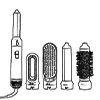
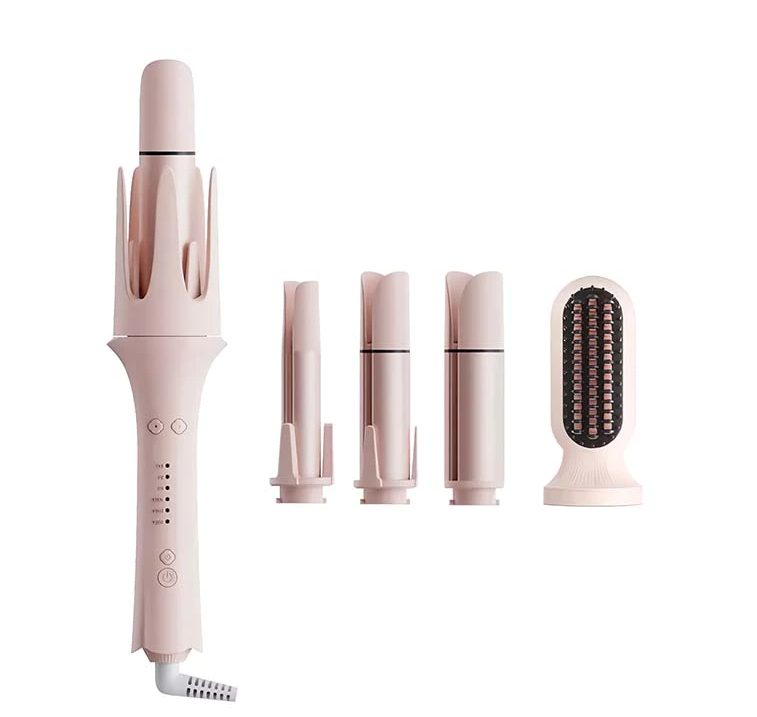
Oval brush heads are often used for adding volume, while round designs are commonly selected for shaping and curling. Paddle-style heads focus more on smoothing and straightening, making them suitable for everyday grooming routines.
Some models are designed with interchangeable brush heads, allowing users to switch between styling effects using a single device, which increases functional flexibility.
User Convenience in Daily Use
Ease of operation plays a major role in product acceptance. Lightweight construction helps reduce hand fatigue during longer styling sessions, while ergonomic handles improve grip comfort.
Swivel cords are often used to prevent tangling during movement, and simplified control layouts make operation more intuitive. Compact designs also make storage and travel easier, which is increasingly important for users with mobile lifestyles.
Safety and Hair Protection Functions
Safety design has become an essential part of heated styling tools. Overheat protection systems are commonly integrated to maintain stable operating temperatures, while automatic shut-off functions help reduce risks during extended use.
Heat-resistant outer materials also contribute to safer handling, especially when devices are used frequently. These safety considerations are becoming more important as users rely on styling tools for daily grooming routines.
Functional Differences in Buying Decisions
Purchasing decisions are often influenced by how well a product aligns with different usage scenarios. Instead of focusing on a single feature, buyers tend to evaluate how the device performs in real daily environments.
Hair type compatibility, usage frequency, styling expectations, portability needs, and maintenance considerations all play a role in product selection. These aspects help determine whether a product is suitable for long-term use in different market segments.
By focusing on practical performance rather than isolated features, importers and distributors can better match products with end-user demand and improve overall market fit.

[email protected]
[email protected]
+86-15167911707
+86-18257873768
Building 2, No.88 Jiugui Road, Chengxi New District, Yougkang City, Zhejiang, China
Copyright © Zhejiang Yongkang MRY Industry & Trade Co., Ltd. All Rights Reserved.
Hair Curler For Home Use Factory